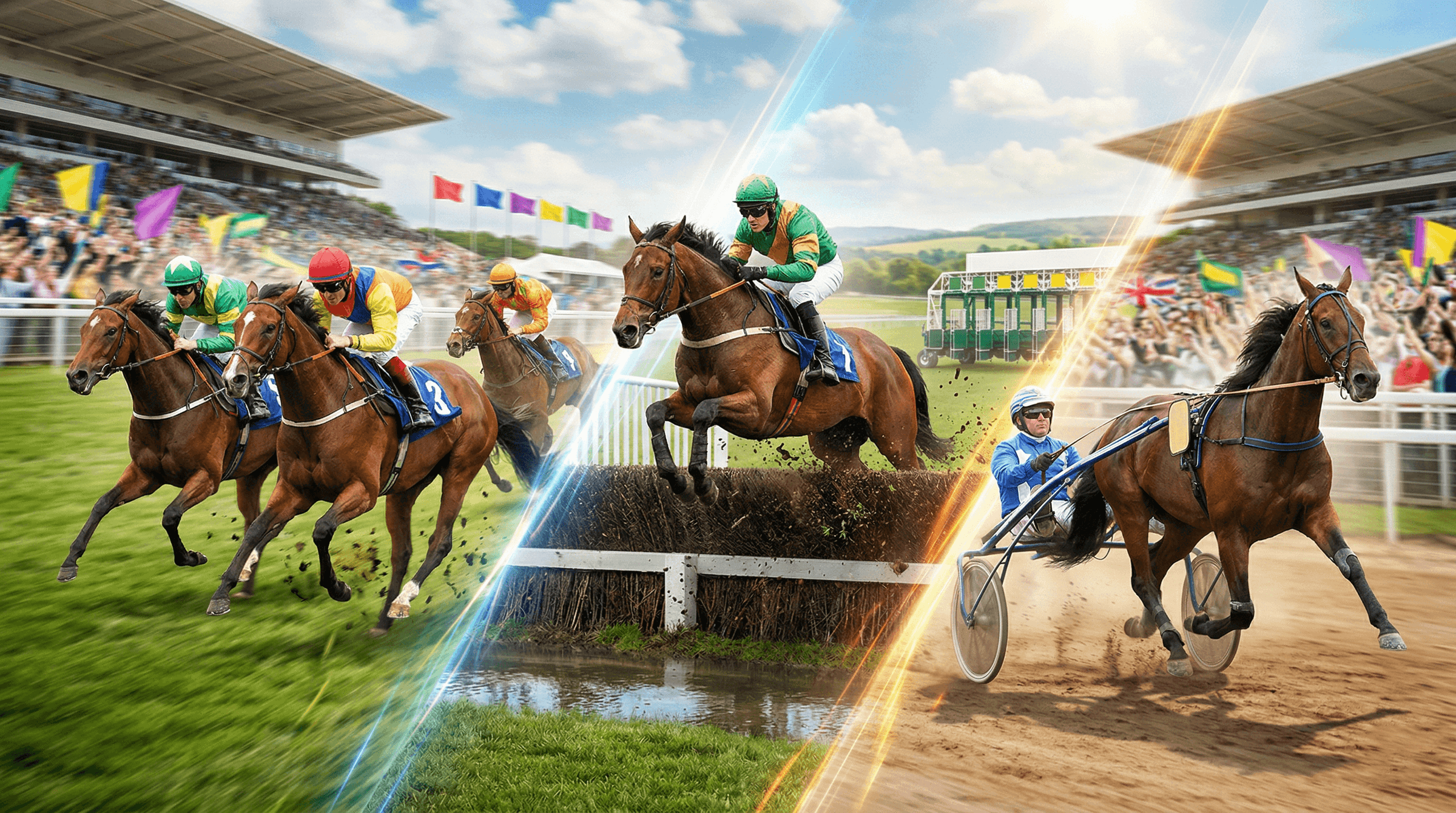
Types of Horse Racing
Horse racing is one of the oldest and most popularly played game in the world. It is also among the oldest sports to be featured at the bookmakers for wagering. When the bettors speak about the types of races, they actually refer to the different formats of the horse racing game. It may vary in rules, track racing, and even the racing style. From finding all the major events in the UK, U.S, UAE, South Africa and Australia.
Each race has its own characteristics. It includes aspects like track surfaces, obstacles, horse breed, race distance and even the competition rules. All these factors together determine how the races are conducted and how the horse perform in the racecourse. Some of the major types of horse racing games include flat racing, jump racing, harness racing, endurance racing and quarter horse racing. Players have to create their own strategies, pace and betting opportunities that would help them to win the race and indirectly, the bets at SpinBetter.
Main Types of Horse Racing Explained
While it might look very simple and easy. But, horse racing is not a one format game. It is segregated into exciting disciplines based on rules, obstacles and the race distances. Each of the listed races presents an unique opportunity to the players along with betting strategies. Fans and bettors can utilise the different ways to enjoy the action of the different types of horse betting games.
Flat Races (Flat Horse Racing)
Flat races are those horse racing games that are competed on the flat tracks. The horse and jockey together compete in the race. These tracks are typically oval shaped, except some countries that might have variations. It is the most common horse race type. The race has different distances that range from 400 metres to 4 kms and distances between five and twelve furlongs. This racing in Great Britain and the USA is very popular. There are no obstacles in this race and is completely a speed based racing. Depending on the distance the race is classified into three types:
| Distance Type | Description | Focus |
|---|---|---|
| Short Distance | Also called sprints. They portray the test of speed. | Speed |
| Middle distance | They are run over distances in the middle of sprints and longer races. It defines the test of both sprint and stamina. | Speed + stamina |
| Long distance | They are called routes in the USA and staying races in Europe. These races define the test of stamina. | Stamina |
Each of these races are further classified into five different categories. They are group 1, group 2 and 3, Listed and handicap. Each of them has its own prize money. All these groups are not available for all age groups. Each of these categories have different age groups. There can also be different race tracks. They are as follows:
- Turf or Dirt Track: These races take place on the dirt tracks or the grass surfaces.
- Jockey Rides the Horse: Here, the riders who compete guides the horse to win the race.
- Short to Long Distances: Races can range between shorter sprints to endurance style sprints, based on the event.
Jump Race / Steeplechase Racing
Jump racing is often known as the national hunt races. This racing types add an extra layer of excitement to the users as players have to clear obstacles during the race. This race type is not just about speed. Players must also show their skills, balance and timing to win the race. Be it hurdles or fences, both the jockey and the horse should be well trained to pass the obstacles. They should not just clear the obstacles but also maintain the pace.
For the jump races, there are usually three categories:
| Jump Race Type | Description | Difficulty | Distance |
|---|---|---|---|
| Hurdles | These are smaller obstacles and are used to test the rhythm and jumping ability of the players. | Medium | Medium |
| Steeplechase | These are larger plain fences, that makes the race bit more challenging. | High | Long |
| Chase | These are longer races having multiple and demanding jumps. | High | Long |
Harness Racing
Harness racing is a different type of jump race that brings a twist to horse racing. The horse does not carry a jockey but carries a cart known as sulky. The driver on the cart controls the horse from behind. The horses have specific gaits, known as trot or pace that they need to use while competing the race. These features add a specific excitement among the bettors betting on the harness racing bets.
Endurance Racing
Unlike flat racing and jump racing, Endurance racing requires the stamina and endurance of the riders and horses. Here, you need to pace gradually and maintain your stamina to cover longer distances. They often cover larger distances in a single day and can go upto 40 km, 80 km and even 160 km. Rather than maintaining the speed, the horse's ability to maintain the stamina matters more. Endurance racing tests the true bond between a rider and a horse as the riders have to manage their horse's power, hydration and energy over time.
Quarter Horse Racing
On the other hand, quarter horse racing is more known for the speed of the horse. As the name suggests, the horses have to run a quarter of a mile, around 400 metres as quickly as possible. It is a shorter distance race and the winner is the one who reachs the finish line first. From start to finish, they have to maintain a rapid pace and complete the race. It is one of the toughest races in the horse racing industry where players cannot have additional weight and all aspects properly covered.
Another unique feature of this race is that it only includes the American Quarter Horse breed. These horses are known for their powerful acceleration and their ability to achieve top speeds in seconds. Since the races are short, a quick acceleration from the beginning decides your claiming price chances.
Other Types of Horse Race
Apart from these racing formats, there are other races too where horses can compete. While these races might not be scheduled in every sports calendar, they are still of high importance and gather a large number of followers.
- 1Arabian racing: Features the purebred Arabian horses only. These horses are known for their endurance and ability and are found mostly in the Middle East Regions and parts of Europe.
- 2Match racing: This is a highly competitive racing. This race has the highest rating among the bettors in terms of quality. Match racing is done between two horses. The horse to reach the finish line first wins the race.
- 3Point-to-point: These are steeplechase races that are mostly held in the rural regions. This type of racing is done to train the horses for professional championships like tevis cup or olympic games or other tournaments.
- 4Exhibition races: These are showcase and non-competitive races that are organised for entertainment and social events.
Comparison of Types of Horse Racing
When we search for horse racing, we only see a few races. In fact, we think that there is only a single race where the mare runs and a rider guides the horse to victory. But, there are many races that take place around the world. Each of them varies based on the polytrack conditions, the jumper, horse breed, specific distance covering and the skill of the jockey.
Here is a comparison of the types of horse racing events that take place around the world.
| Type | Distance | Obstacles | Rider | Main Skill |
|---|---|---|---|---|
| Flat | Short–long | No | Jockey | Speed |
| Jump | Medium | Yes | Jockey | Skill |
| Harness | Medium | No | Driver | Control |
| Endurance | Very long | No | Rider | Stamina |
| Quarter | Very short | No | Jockey | Sprint |
Flat Horse Racing Types and Classifications
Flat racing is not a single category. It includes several levels and race classes. The horses are grouped based on certain age, their abilities and their experience. The classification of the flat horse racing types gives the bettors a chance to get a fair competition. They also get to know more about the horse's quality and its racing levels.
Maiden Races
The maiden horse races are for those horses that have never won a race before. These races give the inexperienced horses a chance to compete against their similar counterparts and gain their first victory.
Claiming Races
The claiming races feature horses that are available for sale at a set price before the race. These type of stakes races helps in balancing the competition. Also, the owners willing to buy horses can do so directly from the race.
Allowance Races
The allowance race features those horses that are not available for sale. Entry to this racing also depends on several conditions like age of the horse, previous wins, and experience. This helps in creating a proper balance in the race.
Handicap Races
In the handicap races, extra weight carried by the horses determines their victory. The stronger horses carry higher weight and makes the competition fairer and transparent for all the horses.
Stakes and Classic Races
The stakes and classic races are the highest levels of horse racing. It also determines the horsemanship of particular horses during the race. The top class horses compete against each other for their prestige, a larger prize money as well as major titles in the world like grand national, etc.
| Race Class | Description | Level |
|---|---|---|
| Maiden | Horses without wins | Beginner |
| Claiming | Horses for sale | Medium |
| Allowance | Limited entry rules | Medium |
| Handicap | Weight added | Advanced |
| Stakes | Top level races | Elite |
Jump Races Types: Hurdles, Steeplechase, and National Hunt
Jump racing is not like other ordinary racing types. It is also known as national hunt racing. Jump racing requires both speed as well as your skill. Horses will not just have to maintain their pace, but they must also overcome the obstacles that come their way. The race not just becomes exciting but also unpredictable. Not just the jumping ability of the horse, the controlling power of the jockey is also tested that makes the game more challenging.
Hurdle Race
Compared to other jump races, the hurdle races feature smaller jumps. This type of race focuses on the rhythm of the horse while testing the speed and its ability to overcome the obstacles.
Steeplechase Racing
The steeplechase racing involves larger and more complex obstacles. It includes water jumps over which the horse has to gallop. There are solid bumper fences to cover. These races not just test the stamina of the horse but also test the jockey's stamina over longer distances.
Hunter Chase
Hunter chase is for the amateur riders. The horses run over the steeplechase fencing. The experienced horses mostly take part in this race and are more popular in the national hunt or the grade 1 racing events.
National Hunt Flat
There are no jumps in this type of race but they follow the same rules as that of the flat races. This type of race is designed to train the young horses and prepare them for the steeplechase races.
Endurance Racing Rules, Distances, and Horse Breeds
Endurance racing is a long distance horse racing. The horses have to run over extended courses. Those horses that have extensive stamina, power, pacing backed by the careful horse management of the jockey can win this race.
Endurance Race Distances
Endurance races are held over several standard distances, each designed for different experience levels of horses and riders. Below are the main race distances and their difficulty levels.
40 km: This is an entry level endurance race. This race is best suited for the new horses and the new riders.
80 km: This is a mid distance race that needs more pacing and stamina.
120 km: This is an advanced version of endurance racing. It requires some serious strength and stamina.
160 km: This is an elite level racing and is designed for the professional horses. It requires ample stamina to run throughout the day.
Horse Breeds Used in Endurance Racing
Several horse breeds are commonly used in endurance racing due to their stamina, efficiency, and ability to perform over long distances. The breeds listed below are considered the most suitable for this type of competition.
Arabian: Arabian is the most popular endurance racing horse breed. These horses are known for excellent metabolism, unmatchable efficiency, and their ability to perform excellently over longer distances.
Thoroughbred: The thoroughbred racing breed are known for their speed and athletic build. A thoroughbred horse can perform exceptionally well over long distance pacing when they are trained properly.
Anglo-Arabian: This is a cross between Arabian and thoroughbred. This breed combines endurance, speed and stamina and is perfectly suited for the demanding endurance races.
How Endurance Horse Races Work
Endurance horse races follow specific rules to ensure fair competition and the safety of the horses. The key elements of the race format are listed below.
Vet checks: The horses undergo regular veterinary checks to ensure that they are healthy and fit to continue the race.
Checkpoints: The riders can stop at the checkpoints for rest. They can continue from there after proper health evaluation.
Time limits: Each race has its own time limits. The horses have to complete the race within the time to qualify for results.
Horse Breeds Used in Different Types of Horse Racing
All the horse racing events do not use the same horse. Different breeds are used based on their abilities. Some breeds are known for their acceleration and speed while some are known for their endurance and stamina. The riders and the jockeys have to understand which breed is suitable for which race and use the horses accordingly. Having a detailed understanding can also help the bettors to determine the accurate racing strategies and know the performance differences.
| Breed | Race Type | Speed | Endurance |
|---|---|---|---|
| Thoroughbred | Flat | High | Medium |
| Arabian | Endurance | Medium | High |
| Quarter horse | Sprint | Very high | Low |
| Standardbred | Harness | Medium | Medium |
Role of the Jockey in Different Horse Race Types
Depending on the type of the race, the role of the rider also changes. In flat racing, the jockey's mostly focus on speed and positioning. In jump racing, the jockey works on guiding the horses to cross the hurdles properly. Harness racing involves a driver to control the horses from the sulky while in endurance racing, the riders manage the pacing as well as the stamina of the horses over time.
Key skills of the riders include:
- Balance and strong riding control.
- Racing strategy and timing.
- Proper communications with the horse.
- Rapid decision making during the race.
Betting and Horse Race Types
Understanding the horse racing types can be crucial for the bettors. The odds can change rapidly while choosing the betting types. Depending on the race types, you have to select your betting type and betting odds, which makes it riskier for the bettors. Endurance races focus on stamina whereas sprint races focus on speed. On the other hand, there are obstacles in the jump races. Bettors have to be careful enough while choosing the race type along with the betting type while wagering.
| Race Type | Betting Difficulty | Popular for Betting |
|---|---|---|
| Flat | Easy | High |
| Jump | Medium | High |
| Harness | Medium | Medium |
| Endurance | Hard | Low |
| Quarter | Medium | Medium |
Conclusion
There are different types of horse racing events like jump racing, endurance racing, harness racing, flat racing, etc. Each type of race has its own rules, challenges, and outcomes. However, the bettors have to be well equipped with each racing type and its details.
From making smarter betting choices to quick decisions, you have to enjoy the sports to the fullest. If you are wagering for the first time, you should be well educated regarding the horse racing types and its aspects.
Pros and Cons of Horse Racing
Pros
- Exciting sport: The fast paced races keep the fans excited and engaged.
- Different formats: There are a variety of race types for the bettors.
- Betting options: There are multiple betting markets available for the bettors.
- Global popularity: Horse racing is a popular sport around the world.
Cons
- Risky for horses: One wrong step can injure the horses and make it risky for them.
- Complex rules: Different race formats and rules can be confusing.
- Injuries possible: Both riders and horses are prone to immense risks.
- Hard for beginners: Understanding the race types, forms and odds can be challenging.
FAQ (Frequently Asked Questions)
The main types of horse racing events are flat racing, jump racing, harness racing, endurance racing, and quarter horse racing. Each of these types differ in distance, rules, and racing style and offer an unique experience for the fans and bettors.
The most popular type of horse racing that you can find at the bookmakers is flat racing. Here, the horses run on flat tracks without any obstacles.
The main difference between flat and jump race is that in flat race, there are no obstacles while in jump race, there are obstacles.
Endurance horse racing is a type where the horses run for a longer distance over the day. The horses are guided by the riders. In endurance horse racing, only those horses survive that have skill along with stamina.
There are different breeds used in horse racing. Some of them include Arabian Breed, Thoroughbred horse breed, and Anglo-Arabian breed.
The flat races are best for betting. You can find a wide range of betting markets and odds for the flat races. Additionally, this type of race is easier to analyze using the speed ratings and form guides.
The horse racing duration can differ based on the race type. Some flat racing events can last between 1-3 minutes while some endurance racing events can run throughout the day.